Peptsche Catalogue
For research purposes only99%+ purityEvery lot independently tested
Catalogue · Edition 01 · October 2026 99%+ purity · every lot testedShop now
What are you looking for?
Research peptide catalogue · Bangkok

Fourteen compounds.
Every lot, tested.

What each peptide is, what the published research has studied it for, and what people who use them say. Lot numbers you can check on the laboratory's own website. No prices in these pages: message the team for current pricing and bundles.

For research purposes only. Every compound in this catalogue is supplied for laboratory research and is not for human use.

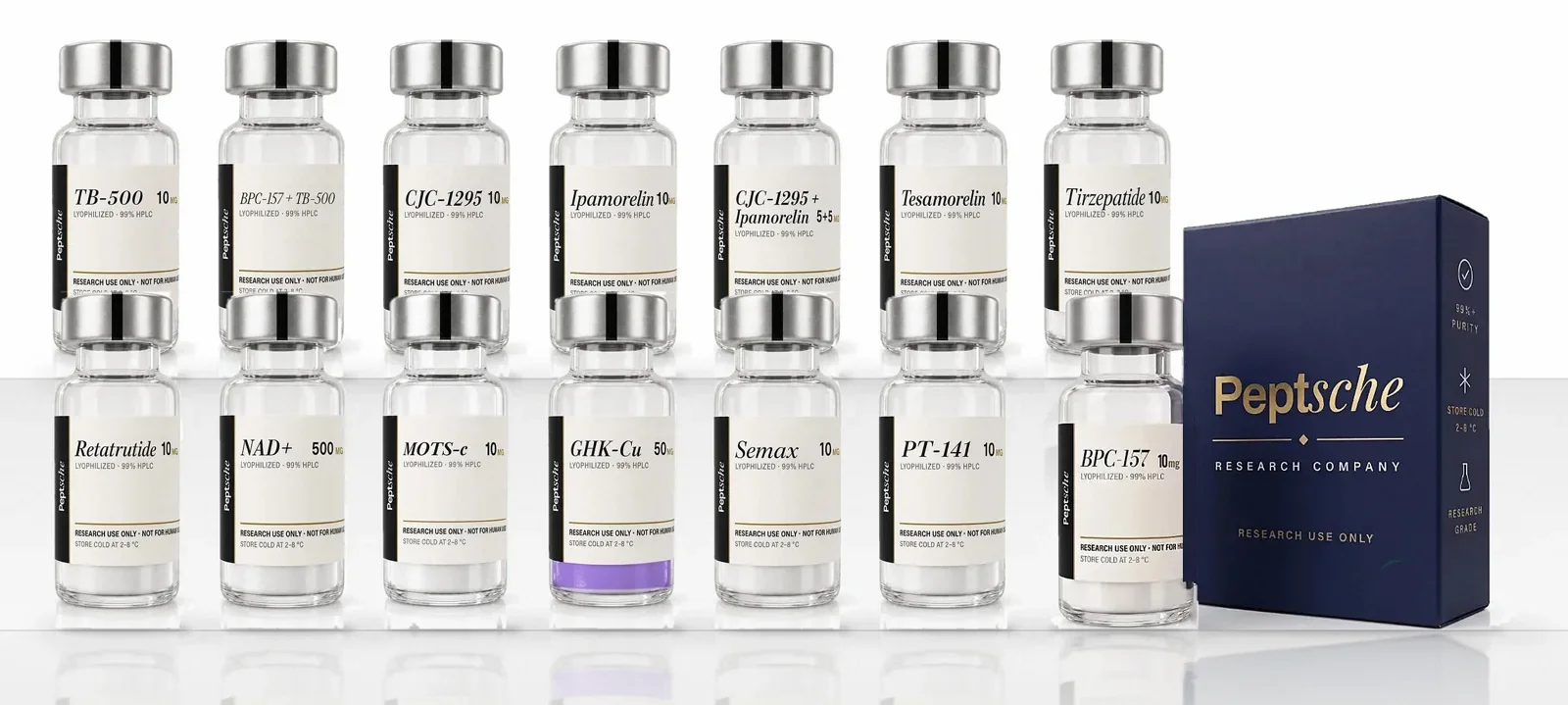
All fourteen Peptsche vials with the navy presentation box
The full range · fourteen sealed vials · navy presentation box
The question we get most

What are peptides?

Short chains of amino acids, usually between two and fifty links long. They are the body's own messenger molecules: insulin, oxytocin and growth hormone releasing hormone are all peptides.

Research peptides are synthesised to an exact sequence, freeze-dried into a sealed vial, and studied in cell and animal models to understand how those signals work.

How to read a page

Three kinds of claim

Studied for lists the areas of published, mostly preclinical, research for that compound.

How it works summarises the mechanism the literature describes, in laboratory models.

What the community reports are individual accounts from public forums and review sites, paraphrased, positive reports selected. They are experiences, not study results.

The compounds

Collection · Healing · 3 compounds · For research purposes only

Recovery & Repair

Compounds studied in tissue-integrity, vascular and mucosal research models.

01Recovery & Repair·Pentadecapeptide · 15 amino acids · 10 mg vial

BPC-157

What it is for

Tissue repair research. Studied in lab research on tissues, blood vessels and the gut lining.

Body Protection Compound
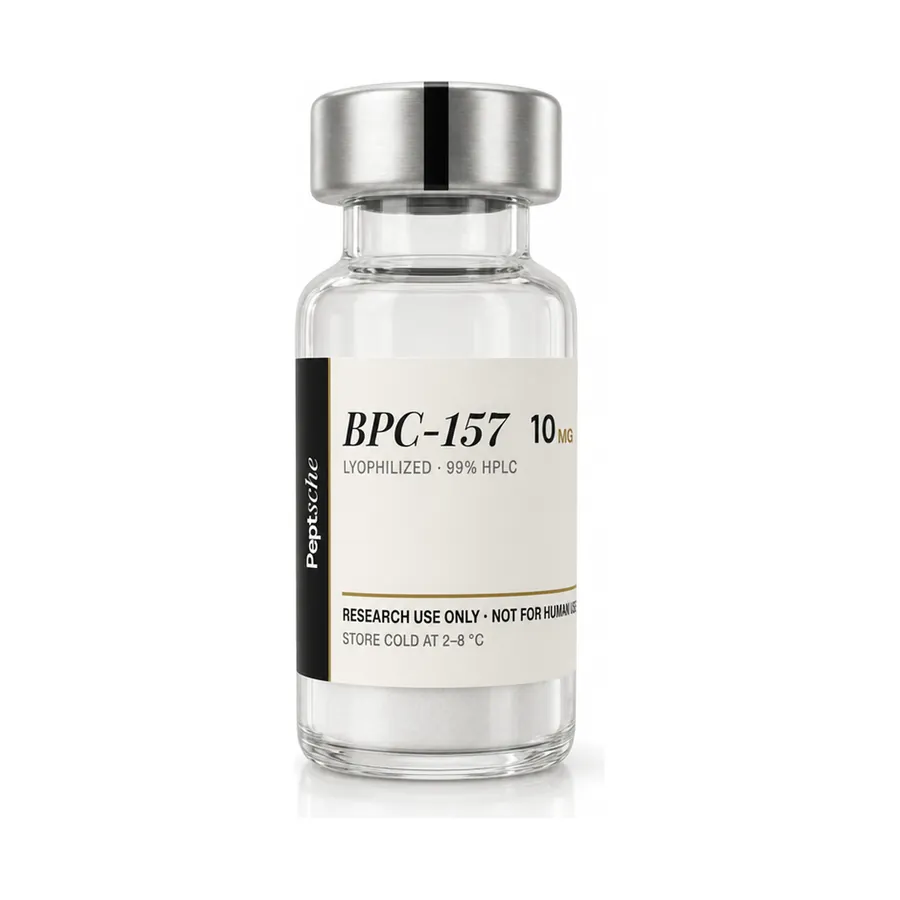
Peptsche BPC-157 vial

For research purposes only · Not for human use

GEPPPGKPADDAGLVsequence, N → C
15amino acids
10 mgper vial
99.93%purity, latest lot
Independently tested · Janoshik Analytical
Measured11.53 mg in a 10 mg vial
Purity99.93%View Janoshik purity report #236040 (opens in a new tab) ↗
Endotoxin<1 EU/vialView Janoshik endotoxin report #236041 (opens in a new tab) ↗
ReportJanoshik #236040 & #236041Sept 2026
FormulaC62H98N16O22
Mol. weight1419.5 g/mol
CAS137525-51-0
Vial10 mg lyophilised powder
StorageSealed, 2–8 °C, away from light

A fifteen-amino-acid sequence copied from a protective protein first found in gastric juice. Short, unusually stable in solution, and one of the most-cited research peptides for tissue integrity.

Studied for

  • Tissue organisation & structural response
  • Vascular & microcirculatory models
  • Gut & mucosal research
  • Inflammatory signalling & cellular stress

How it works in laboratory models

In laboratory models it acts across several signalling systems rather than one receptor: nitric-oxide and vascular signalling (the Src / Caveolin-1 / eNOS pathway), angiogenic responses involving VEGF and FAK, and the balance of cellular stress and inflammation.

02Recovery & Repair·Acetylated heptapeptide · amino acids 17–23 of Tβ4 · 10 mg vial

TB-500

What it is for

Tissue repair research. A piece of a natural protein (thymosin beta-4), studied in lab research on cell movement and tissue repair.

Thymosin β4 fragment

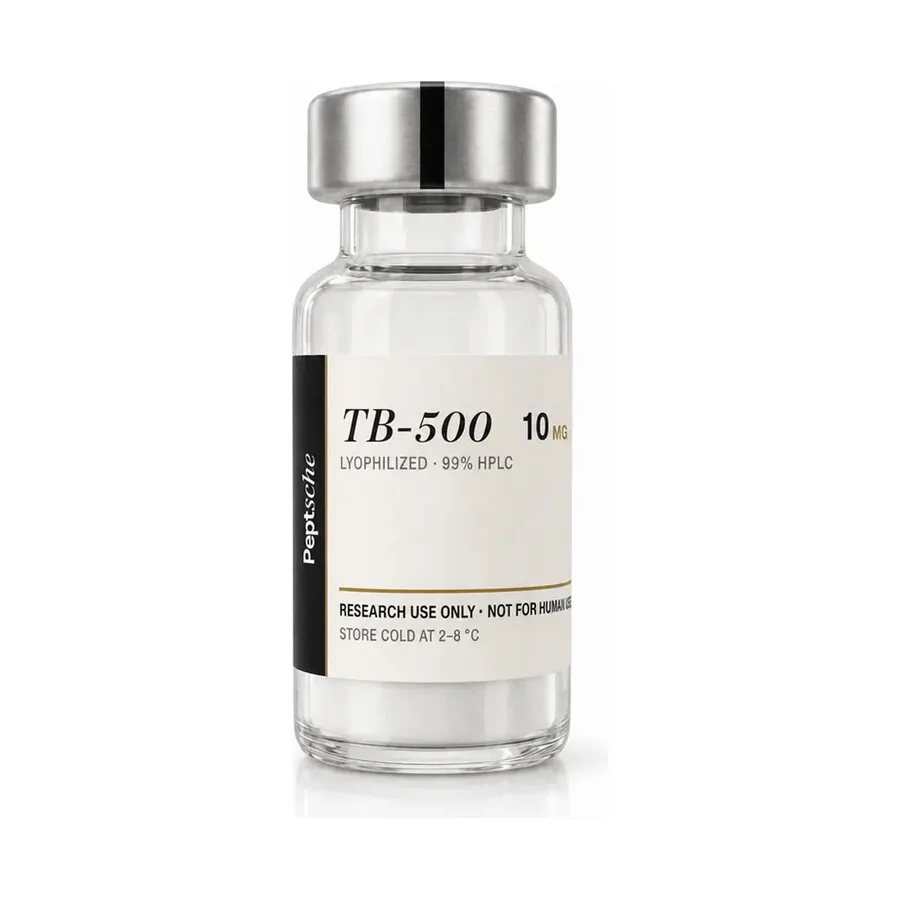
Peptsche TB-500 vial

For research purposes only · Not for human use

AcLKKTETQsequence, N → C
7amino acids
10 mgper vial
Tβ4parent protein
Independently tested · Janoshik Analytical

Report for the current lot is pending publication. Every lot ships with a certificate of analysis once issued.

FormulaC38H68N10O14
Mol. weight889.0 g/mol
CAS885340-08-9
SequenceAc-Leu-Lys-Lys-Thr-Glu-Thr-Gln-OH
Vial10 mg lyophilised powder
StorageSealed, 2–8 °C, away from light

The actin-binding segment of thymosin beta-4, a protein present in almost every cell. Seven amino acids, acetylated at one end, carrying the part of the parent protein that binds G-actin.

Studied for

  • Cytoskeletal & cell-motility models
  • Endothelial & vascular research
  • Tissue response & repair models
  • Comparative peptide research

How it works in laboratory models

It binds monomeric G-actin, the building block of the cell's cytoskeleton, and so shapes filament dynamics: the machinery cells use to move, migrate and reorganise. Much of the literature studies the full-length protein, which the fragment is derived from.

03Recovery & Repair·Two-component blend · co-lyophilised · 10 mg vial

Wolverine Blend

What it is for

Tissue repair research. Two research peptides in one vial (BPC-⁠157 + TB-⁠500), studied in lab models of tissue repair.

BPC-157 + TB-500, 5 mg + 5 mg

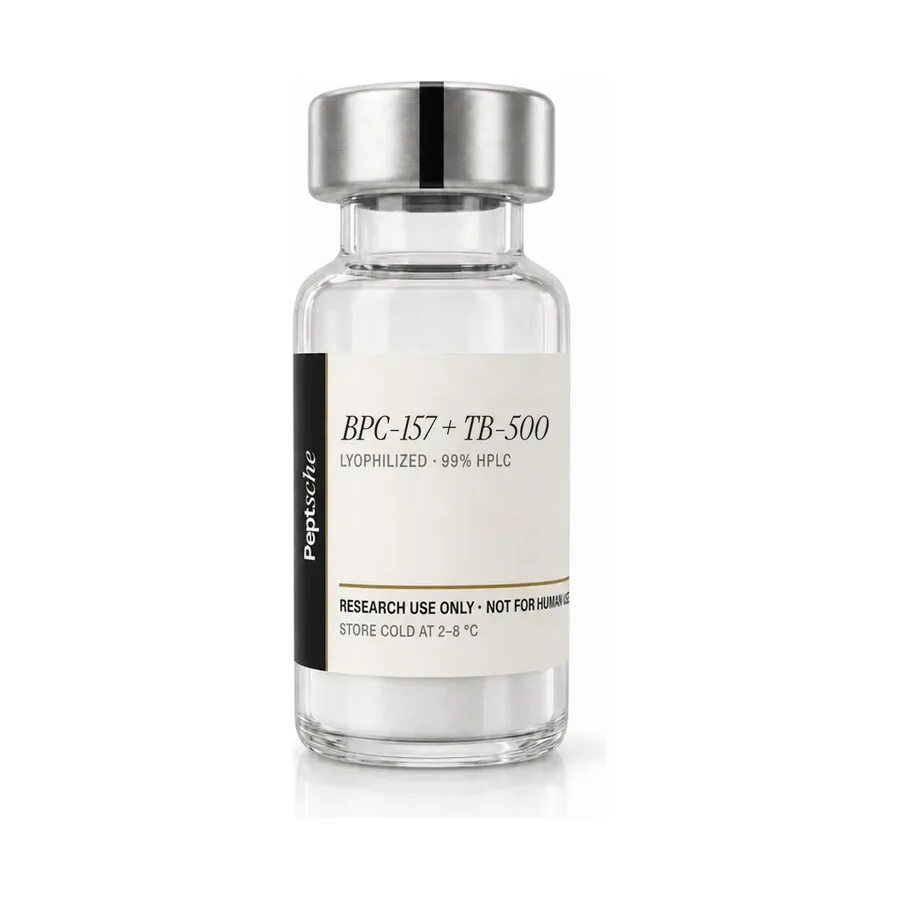
Peptsche Wolverine Blend vial

For research purposes only · Not for human use

GEPPPGKPADDAGLVAcLKKTETQ
2peptides
5 + 5 mgper vial
<1 EUendotoxin, latest lot
Independently tested · Janoshik Analytical
MeasuredBPC-1575.69 mgTB-5005.62 mgin a 5/5 mg vialView Janoshik quantity report #236044 (opens in a new tab) ↗
Endotoxin<1 EU/vialView Janoshik endotoxin report #236045 (opens in a new tab) ↗
ReportJanoshik #236044 & #236045Sept 2026
BPC-157C62H98N16O22 · 1419.5 g/mol · CAS 137525-51-0
TB-500C38H68N10O14 · 889.0 g/mol · CAS 885340-08-9
Vial5 mg + 5 mg, co-lyophilised
StorageSealed, 2–8 °C; let the vial reach room temperature before opening

The two recovery peptides in one vial, in the 1:1 ratio the community settled on long ago. Each peptide is synthesised separately and then combined, so you get two defined research materials in a single sealed container.

Studied for

  • Endothelial & vascular cell culture
  • Animal-model tissue studies
  • Cytoskeletal & analytical reference use

How it works in laboratory models

Two unrelated pathways in one preparation: BPC-157's nitric-oxide and angiogenic signalling, and TB-500's actin binding and cytoskeletal reorganisation. Each component has its own literature; the pairing itself is a community convention rather than a published protocol.

Collection · Muscle growth · Sleep · 4 compounds · For research purposes only

Growth Hormone Axis

Secretagogues and releasing-hormone analogues studied for their action on the pituitary and the growth-hormone axis.

04Growth Hormone Axis·GHRH analogue · 29 amino acids · 10 mg vial

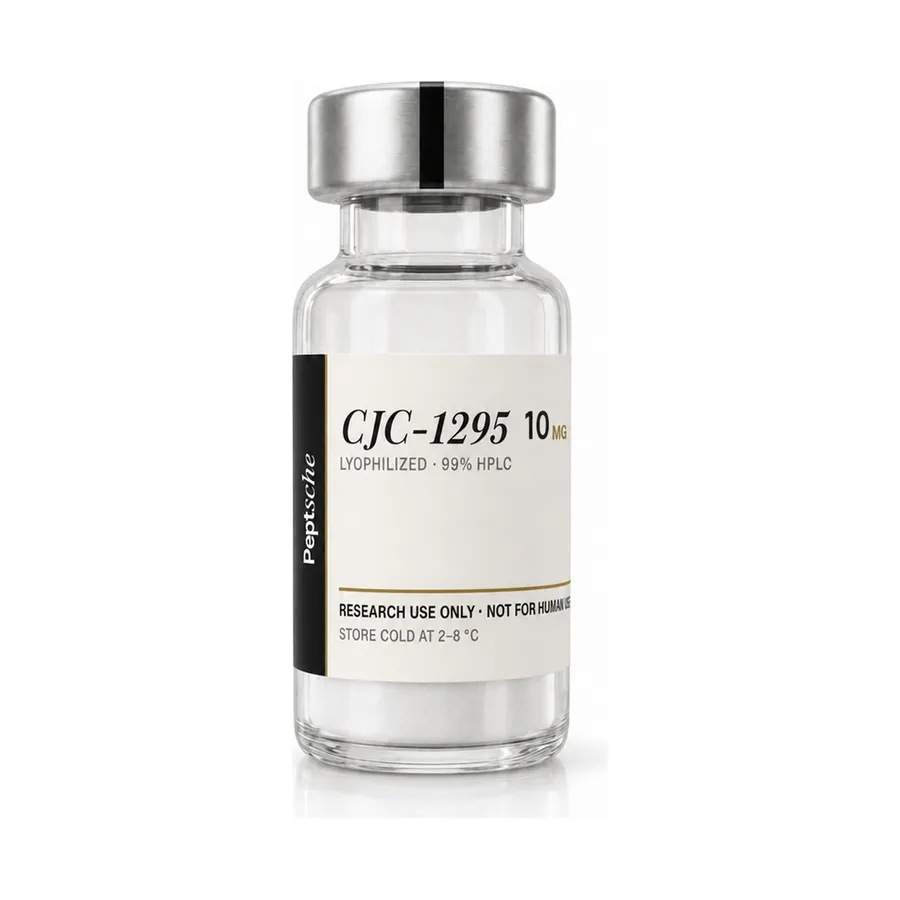
CJC-1295

What it is for

Growth-⁠hormone pathway research. A shorter lab-⁠made version of that same signal, studied in laboratory models.

Modified GRF (1-29), without DAC

Peptsche CJC-1295 vial

For research purposes only · Not for human use

29 amino acids, N → C
29amino acids
10 mgper vial
GHRH-Rtarget
Independently tested · Janoshik Analytical

Report for the current lot is pending publication. Every lot ships with a certificate of analysis once issued.

FormulaC152H252N44O42
Mol. weight3367.9 g/mol
PubChem CID56841945
Vial10 mg lyophilised powder
StorageSealed, 2–8 °C, away from light

A 29-amino-acid analogue of growth-hormone-releasing hormone with four substitutions that resist enzymatic breakdown. This is the form without the DAC albumin-binding group, so its action in models is short and pulse-like rather than continuous.

Studied for

  • GHRH-receptor pharmacology & binding
  • Comparative stability studies
  • Analytical reference standard

How it works in laboratory models

It binds the growth-hormone-releasing-factor receptor on pituitary somatotrophs and raises cyclic AMP. A D-alanine at position two blocks the enzyme (DPP-IV) that would otherwise clip the native hormone within minutes.

05Growth Hormone Axis·Pentapeptide · 5 amino acids · 10 mg vial

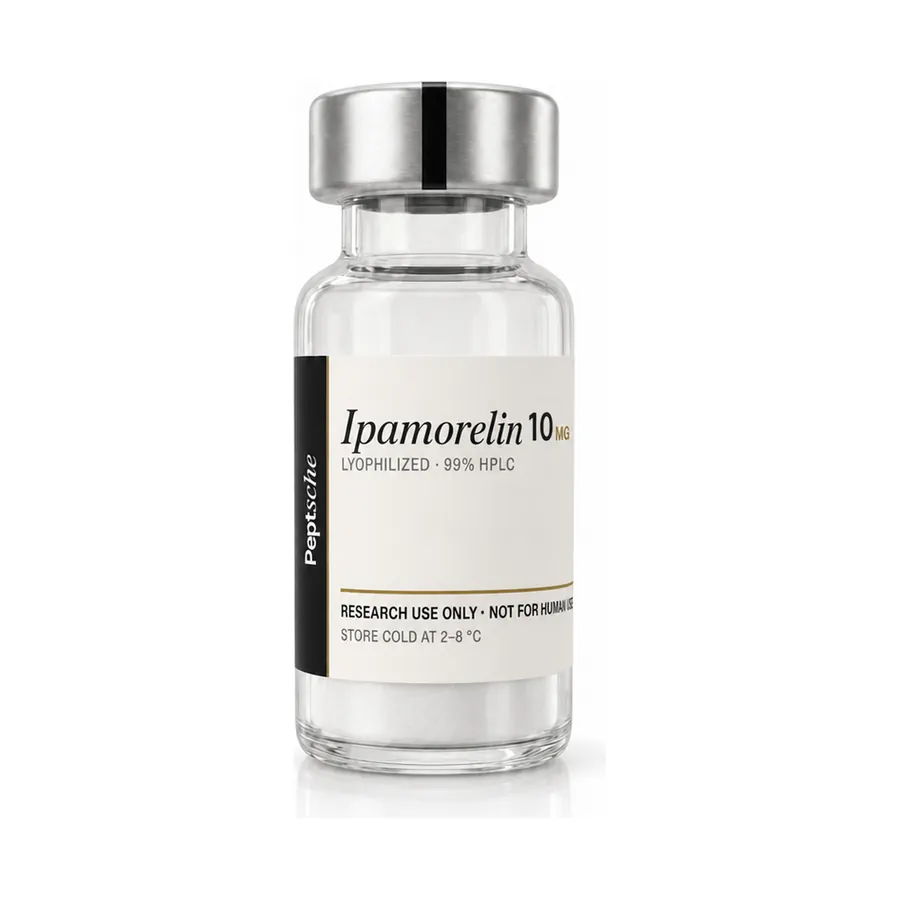
Ipamorelin

What it is for

Growth-⁠hormone pathway research. A small peptide, studied in lab research on how the pituitary gland releases growth hormone.

Selective GH secretagogue

Peptsche Ipamorelin vial

For research purposes only · Not for human use

AibHNalFKsequence, N → C
5amino acids
10 mgper vial
GHS-R1atarget
Independently tested · Janoshik Analytical

Report for the current lot is pending publication. Every lot ships with a certificate of analysis once issued.

FormulaC38H49N9O5
Mol. weight711.9 g/mol
CAS170851-70-4
Also known asNNC 26-0161
Vial10 mg lyophilised powder
StorageSealed, 2–8 °C, away from light

A five-amino-acid growth-hormone secretagogue known in the literature for its selectivity: in models it raises growth hormone without the cortisol and prolactin spikes seen with earlier peptides of its class.

Studied for

  • Pituitary cell & receptor assays
  • Skeletal endpoints in rodent models
  • Comparative secretagogue pharmacology

How it works in laboratory models

An agonist at the ghrelin receptor GHS-R1a, a receptor separate from the GHRH receptor, where it mobilises intracellular calcium. Non-standard amino acids (Aib and D-configured aromatics) give the short chain its stability.

06Growth Hormone Axis·Two-component blend · co-lyophilised · 5 + 5 mg vial

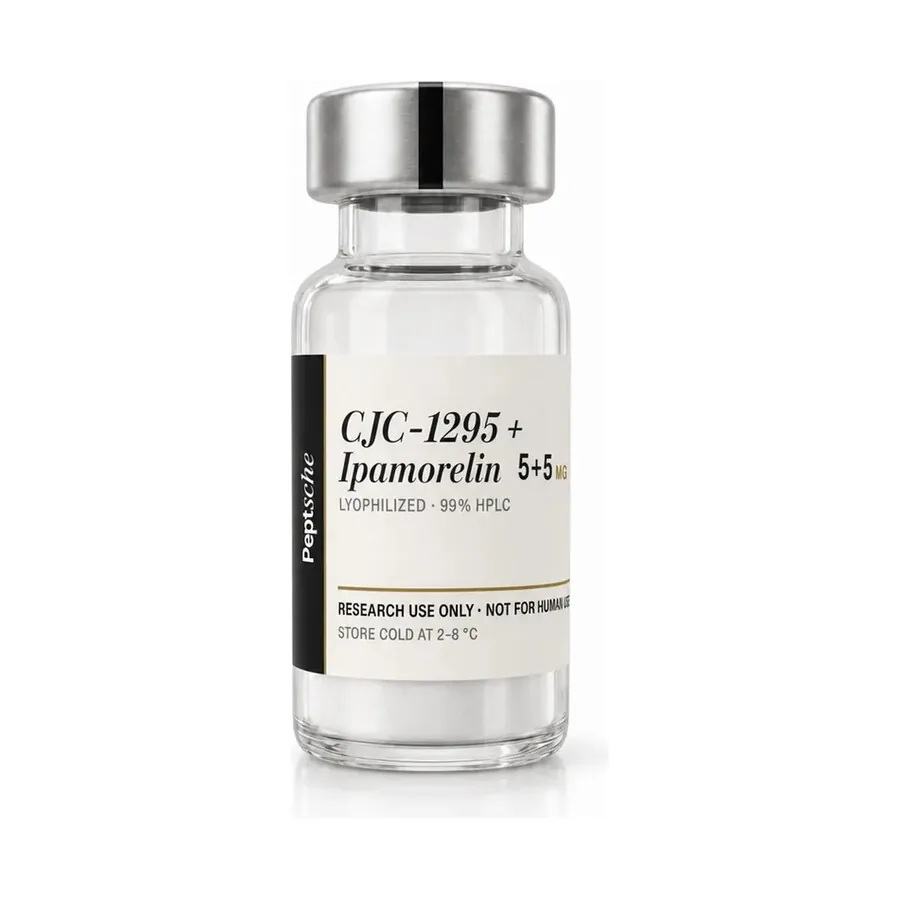
CJC-1295 + Ipamorelin

What it is for

Growth-⁠hormone pathway research. Two research peptides in one vial, studied together in lab models of growth-⁠hormone release.

The classic pairing, 5 mg + 5 mg

Peptsche CJC-1295 + Ipamorelin vial

For research purposes only · Not for human use

·····························AibHNalFK
2peptides
5 + 5 mgper vial
<1 EUendotoxin, latest lot
Independently tested · Janoshik Analytical
MeasuredIpamorelin5.58 mgCJC-12954.93 mgin a 5/5 mg vialView Janoshik quantity report #236048 (opens in a new tab) ↗
Endotoxin<1 EU/vialView Janoshik endotoxin report #236049 (opens in a new tab) ↗
ReportJanoshik #236048 & #236049Sept 2026
CJC-1295C152H252N44O42 · 3367.9 g/mol
IpamorelinC38H49N9O5 · 711.9 g/mol · CAS 170851-70-4
Vial5 mg + 5 mg, co-lyophilised
StorageSealed, 2–8 °C, away from light

A GHRH analogue and a ghrelin-receptor agonist in one vial, in a fixed 1:1 ratio. The two act on different receptors of the same pituitary cells, which is why the pairing became the community's default entry point to growth-hormone research.

Studied for

  • GRF-receptor signalling (CJC-1295)
  • GHS-R1a signalling (ipamorelin)
  • Two targets in one preparation

How it works in laboratory models

CJC-1295 raises cyclic AMP through the growth-hormone-releasing-factor receptor; ipamorelin mobilises calcium through GHS-R1a. Each component has its own literature; the pairing is a convention rather than a published combination.

07Growth Hormone Axis·44 amino acids · N-terminal hexenoyl · 10 mg vial

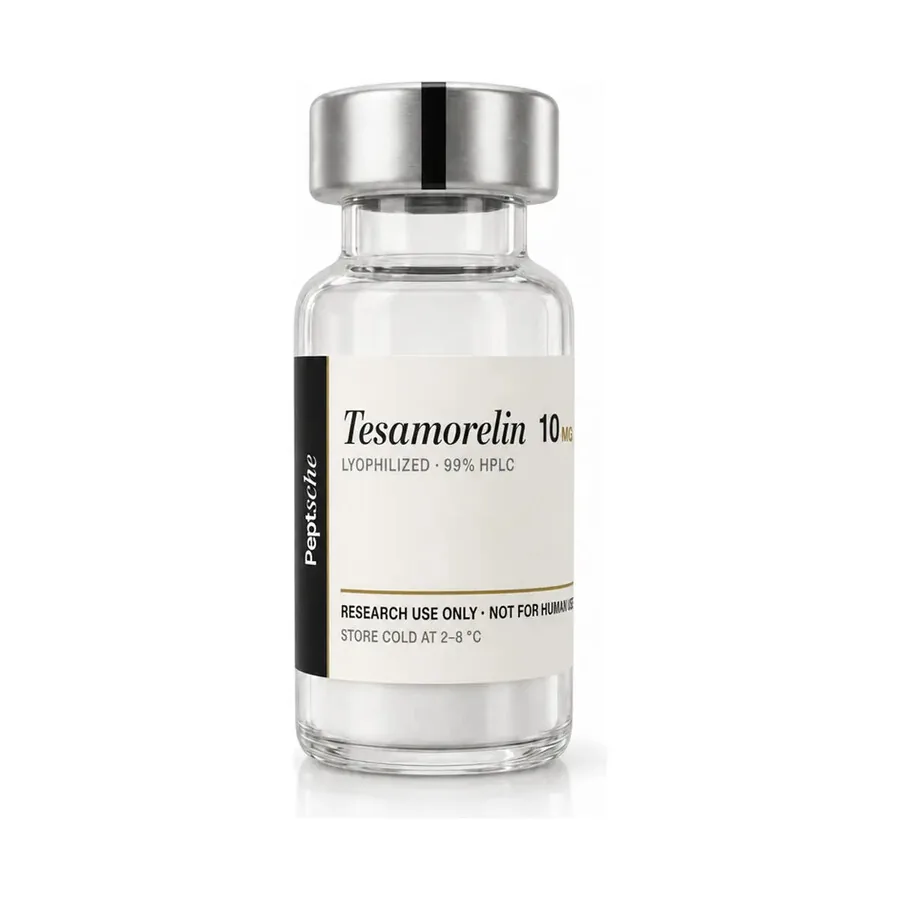
Tesamorelin

What it is for

Growth-⁠hormone pathway research. A lab-⁠made version of the body’s own growth-⁠hormone-⁠releasing signal, studied in laboratory models.

Full-length GHRH analogue

Peptsche Tesamorelin vial

For research purposes only · Not for human use

44 amino acids, N → C
44amino acids
10 mgper vial
98.59%purity, latest lot
Independently tested · Janoshik Analytical
Measured10.61 mg in a 10 mg vial
Purity98.59%View Janoshik purity report #236046 (opens in a new tab) ↗
Endotoxin<1 EU/vialView Janoshik endotoxin report #236047 (opens in a new tab) ↗
ReportJanoshik #236046 & #236047Sept 2026
FormulaC221H366N72O67S
Mol. weight5135.9 g/mol
CAS218949-48-5
Also known asTH9507
Vial10 mg lyophilised powder
StorageSealed, 2–8 °C, away from light

A 44-amino-acid analogue of growth-hormone-releasing hormone with a trans-3-hexenoyl group on its amino terminus. The same molecule is the active ingredient of an approved prescription medicine, studied in clinical trials for visceral fat; the Peptsche material is a research-grade reagent, not that medicine.

Studied for

  • Clinical literature of the approved medicine (visceral adiposity, metabolic profile)
  • Receptor & analytical characterisation
  • Comparative structural work against shorter analogues

How it works in laboratory models

It binds the GHRH receptor on anterior-pituitary somatotrophs, signals through the stimulatory G protein and raises cyclic AMP. The acyl group resists peptidase breakdown, and the full-length chain makes it the reference comparator for 29-amino-acid analogues.

Collection · Weight loss · 2 compounds · For research purposes only

Metabolic & Weight

Incretin-receptor agonists from the newest generation of metabolic research, studied in appetite-regulation and metabolic models.

08Metabolic & Weight·39 amino acids · C20 fatty diacid · 10 mg vial

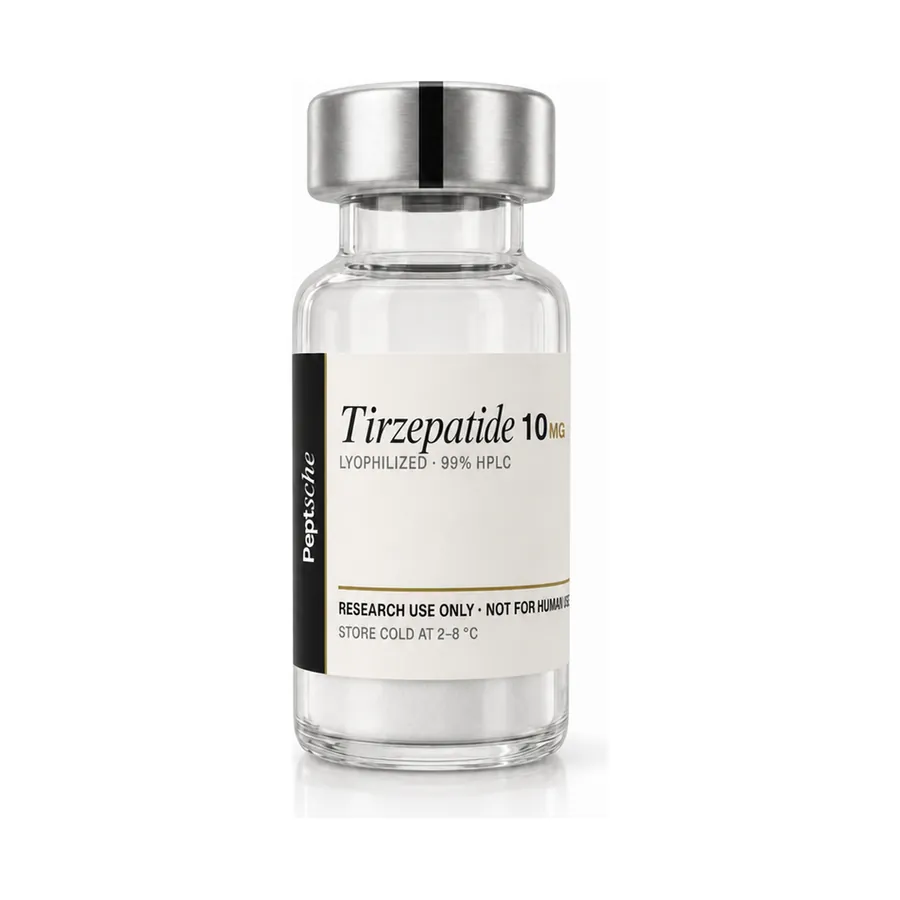
Tirzepatide

What it is for

Metabolism and weight-⁠loss research. A two-⁠receptor peptide, studied in lab models of metabolism, body weight and appetite signals.

Dual GIP / GLP-1 receptor agonist

Peptsche Tirzepatide vial

For research purposes only · Not for human use

39 amino acids, N → C
39amino acids
10 mgper vial
99.93%purity, latest lot
Independently tested · Janoshik Analytical
Measured11.15 mg in a 10 mg vial
Purity99.93%View Janoshik purity report #236036 (opens in a new tab) ↗
Endotoxin<1 EU/vialView Janoshik endotoxin report #236037 (opens in a new tab) ↗
ReportJanoshik #236036 & #236037Sept 2026
FormulaC225H348N48O68
Mol. weight4813.5 g/mol
CAS2023788-19-2
Also known asLY3298176
Vial10 mg lyophilised powder
StorageSealed, 2–8 °C, away from light

A 39-amino-acid peptide engineered to act on two incretin receptors, GIP and GLP-1, in one molecule. Two Aib substitutions resist enzymatic breakdown and a C20 fatty-diacid chain binds albumin, which is what gives the molecule its once-weekly profile. The same molecule is the active ingredient of Mounjaro and Zepbound; this is research-grade material.

Studied for

  • Receptor binding & cell-based signalling assays
  • Islet & adipocyte culture systems
  • Clinical literature context (SURPASS, SURMOUNT)

How it works in laboratory models

Dual agonism at the GIP and GLP-1 receptors, with a reported signalling bias at GLP-1 receptors that favours cyclic AMP over β-arrestin recruitment. Albumin binding extends the time it stays in circulation.

09Metabolic & Weight·39 amino acids · investigational, Phase 3 · 10 mg vial

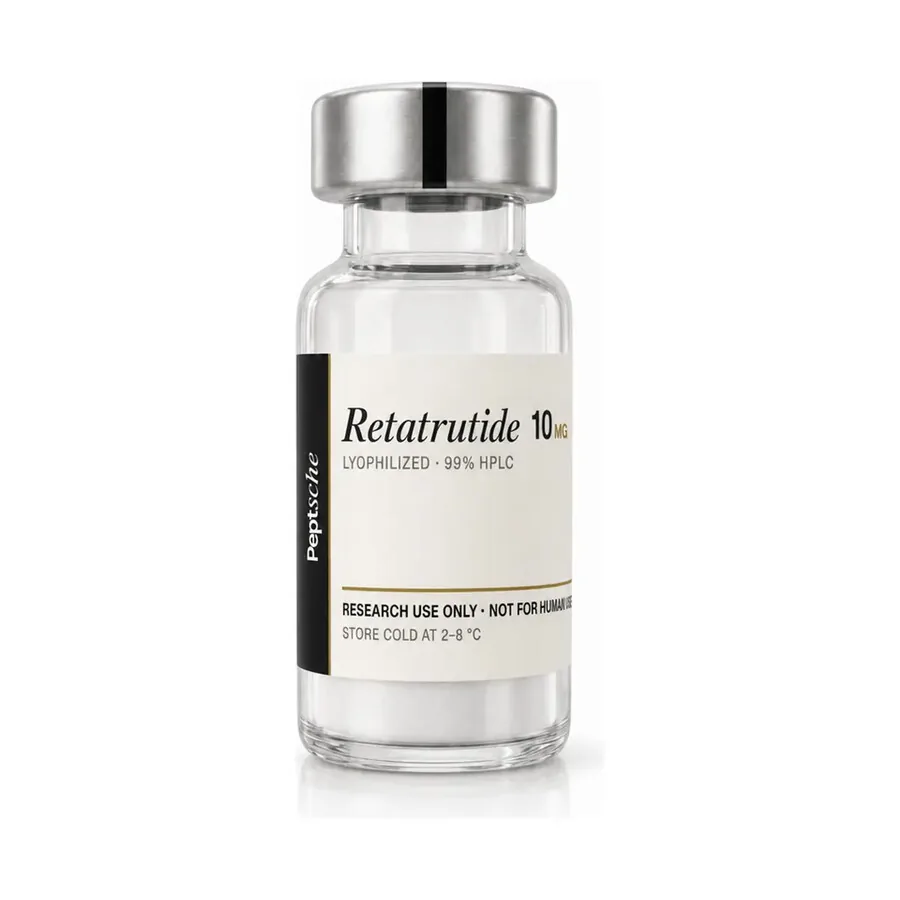
Retatrutide

What it is for

Metabolism and weight-⁠loss research. A three-⁠receptor peptide, studied in lab models of metabolism, body weight and appetite signals.

Triple GCG / GIP / GLP-1 receptor agonist

Peptsche Retatrutide vial

For research purposes only · Not for human use

39 amino acids, N → C
3receptors
10 mgper vial
99.91%purity, latest lot
Independently tested · Janoshik Analytical
Measured11.61 mg in a 10 mg vial
Purity99.91%View Janoshik purity report #236034 (opens in a new tab) ↗
Endotoxin<1 EU/vialView Janoshik endotoxin report #236035 (opens in a new tab) ↗
ReportJanoshik #236034 & #236035Sept 2026
FormulaC221H342N46O68
Mol. weight≈ 4731 g/mol
CAS2381089-83-2
Also known asLY3437943
Vial10 mg lyophilised powder
StorageSealed, 2–8 °C, away from light

A 39-amino-acid peptide built to act on three receptors at once: glucagon, GIP and GLP-1. Eli Lilly's investigational LY3437943, currently in Phase 3 and not yet approved anywhere. Aib amino acids resist breakdown and a C20 diacid chain binds albumin.

Studied for

  • Multiplexed receptor-signalling assays
  • Comparative polyagonist pharmacology
  • Analytical method development
  • Phase 2 literature (NEJM 2023)

How it works in laboratory models

All three receptors couple to adenylate cyclase, so cyclic AMP is the shared readout. The activity is deliberately unbalanced across the three targets rather than equal, which is what makes it a distinct research tool from dual agonists.

Collection · Anti-aging · 2 compounds · For research purposes only

Longevity & Cellular Energy

A coenzyme and a mitochondrial peptide, both central to how cells make and manage energy. Studied in metabolism and ageing biology.

10Longevity & Cellular Energy·Coenzyme, not a peptide · 500 mg vial

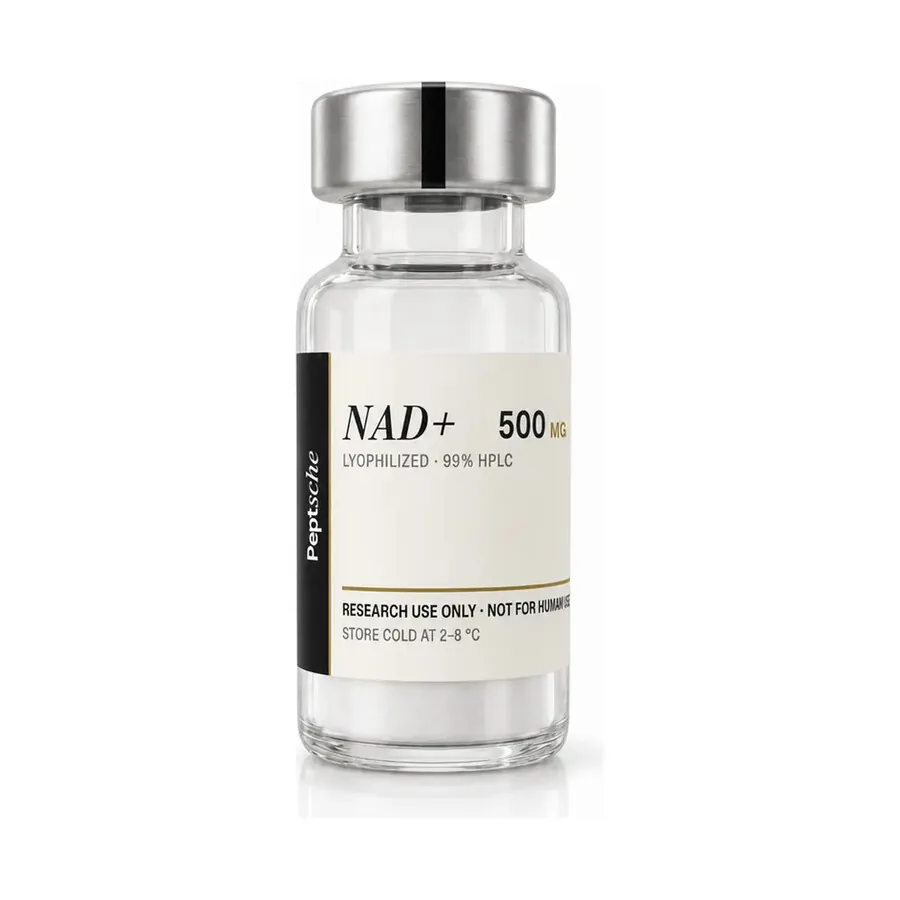
NAD+

What it is for

Cell energy research. A molecule found in every cell, studied in lab research on cell energy and cell ageing.

Nicotinamide adenine dinucleotide

Peptsche NAD+ vial

For research purposes only · Not for human use

N+ribosePPribosenicotinamideadenine
500 mgper vial
Redoxcofactor
Sirtuinssubstrate for
Independently tested · Janoshik Analytical

Report for the current lot is pending publication. Every lot ships with a certificate of analysis once issued.

FormulaC21H27N7O14P2
Mol. weight663.4 g/mol
CAS53-84-9
Also known asnadide, β-NAD, coenzyme I
Vial500 mg lyophilised powder
StorageSealed, 2–8 °C, away from light

The coenzyme every living cell uses to move electrons through metabolism. Not a peptide at all: a dinucleotide that cycles between its oxidised and reduced forms, and a substrate consumed by sirtuin and PARP enzymes, which is why cellular levels are a regulated variable and a central subject of ageing biology.

Studied for

  • Enzyme assays & biochemical reagent use
  • Cellular metabolism & mitochondrial studies
  • Ageing biology & analytical standards

How it works in laboratory models

As a redox cofactor it carries electrons between reactions; as a substrate it is consumed by sirtuins and PARPs, the enzymes most associated with DNA repair and metabolic regulation in the literature.

11Longevity & Cellular Energy·16 amino acids · encoded in mitochondrial DNA · 10 mg vial

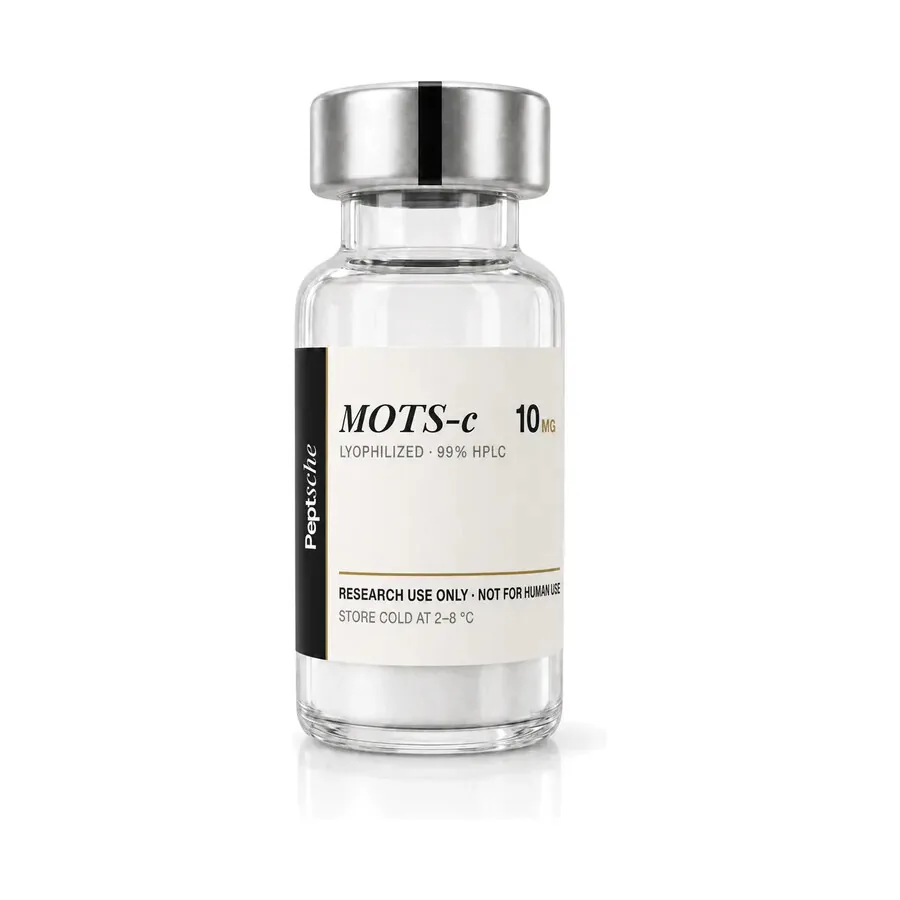
MOTS-c

What it is for

Cell energy research. A small peptide made by the cell’s energy units (mitochondria), studied in lab research on metabolism.

Mitochondrial-derived peptide

Peptsche MOTS-c vial

For research purposes only · Not for human use

MRWQEMGYIFYPRKLRsequence, N → C
16amino acids
10 mgper vial
98.93%purity, latest lot
Independently tested · Janoshik Analytical
Measured11.33 mg in a 10 mg vial
Purity98.93%View Janoshik purity report #236042 (opens in a new tab) ↗
Endotoxin2.794 EU/vialView Janoshik endotoxin report #236043 (opens in a new tab) ↗
ReportJanoshik #236042 & #236043Sept 2026
FormulaC102H153N25O26S2
Mol. weight≈ 2174 g/mol
CAS1627580-64-6
Vial10 mg lyophilised powder
StorageSealed, 2–8 °C, away from light

A sixteen-amino-acid peptide encoded not in the nucleus but in the mitochondrial genome, in the 12S rRNA region. One of the mitochondrial-derived peptides: signals the mitochondria send back to the cell when metabolic stress rises.

Studied for

  • Cellular metabolism assays
  • Mitochondrial-derived peptide comparison (humanin, SHLPs)
  • Analytical method development
  • Exercise & metabolism literature (Cell Metab 2015, 2018)

How it works in laboratory models

No cell-surface receptor has been established. The cited work describes interference with the folate cycle leading to AICAR accumulation, which indirectly activates AMPK, the cell's energy sensor; separate studies describe it moving into the nucleus under metabolic stress.

Collection · Anti-aging · 1 compound · For research purposes only

Skin & Hair

The copper peptide. Fifty years of skin and connective-tissue research in a blue vial.

12Skin & Hair·Gly-His-Lys · copper complex · 50 mg vial

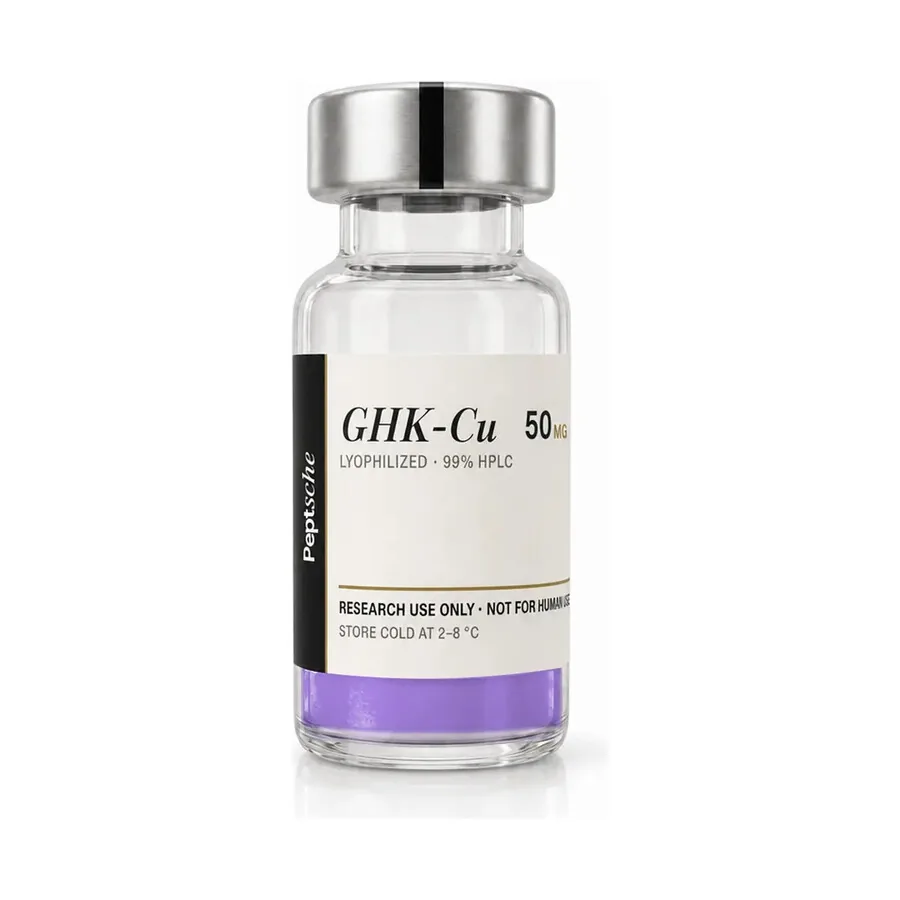
GHK-Cu

What it is for

Skin and hair research. A copper peptide, studied in lab research on skin cells and connective tissue.

Copper tripeptide-1

Peptsche GHK-Cu vial

For research purposes only · Not for human use

GHKCusequence, N → C
3amino acids + Cu
50 mgper vial
99.87%purity, latest lot
Independently tested · Janoshik Analytical
Measured58.22 mg in a 50 mg vial49.25 mg GHK, 8.97 mg copper
Purity99.87%View Janoshik purity report #236038 (opens in a new tab) ↗
Endotoxin<1 EU/vialView Janoshik endotoxin report #236039 (opens in a new tab) ↗
ReportJanoshik #236038 & #236039Sept 2026
FormulaC14H22N6O4·Cu
Mol. weight401.91 g/mol
CAS89030-95-5
AppearanceBlue lyophilised powder
Vial50 mg
StorageSealed, 2–8 °C, away from light

The copper-binding tripeptide glycyl-histidyl-lysine, first isolated from human plasma in the early 1970s. The blue powder is the copper complex. It is also a listed cosmetic ingredient (INCI: Copper tripeptide-1), which is why it appears in serums as well as research catalogues.

Studied for

  • Dermal fibroblast & skin models
  • Connective-tissue remodelling in rodents
  • Reference metallopeptide in coordination chemistry

How it works in laboratory models

Three reported themes: reversible copper coordination, transcriptional shifts in matrix-associated genes in cultured fibroblasts and animal tissue, and changes in oxidative markers and the balance of matrix synthesis and degradation.

Collection · Cognitive · 1 compound · For research purposes only

Mind

A neuropeptide studied for neurotrophin expression in brain tissue.

13Mind·Heptapeptide · 7 amino acids · 10 mg vial

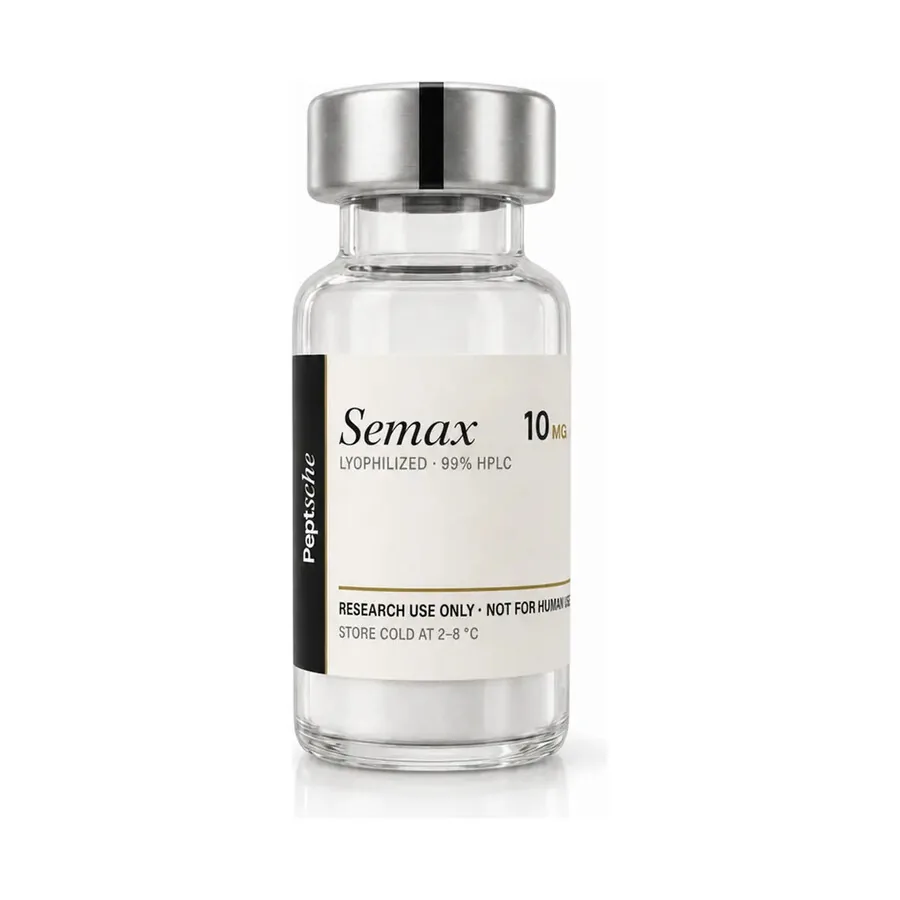
Semax

What it is for

Brain research. A short peptide, studied in lab research on proteins that support nerve cells in brain tissue.

ACTH (4–7)-Pro-Gly-Pro

Peptsche Semax vial

For research purposes only · Not for human use

MEHFPGPsequence, N → C
7amino acids
10 mgper vial
BDNFstudied pathway
Independently tested · Janoshik Analytical

Report for the current lot is pending publication. Every lot ships with a certificate of analysis once issued.

FormulaC37H51N9O10S
Mol. weight813.9 g/mol
CAS80714-61-0
SequenceMet-Glu-His-Phe-Pro-Gly-Pro
Vial10 mg lyophilised powder
StorageSealed, 2–8 °C, away from light

A seven-amino-acid fragment of the hormone ACTH (positions four to seven) with a Pro-Gly-Pro tail added for stability. Developed in Russia and studied there for decades as a neuropeptide; the research literature centres on neurotrophin expression in brain tissue.

Studied for

  • Rodent hippocampal & brain-tissue studies (BDNF, trkB)
  • Transcriptional profiling in ischaemia models
  • Peptide stability & analytical work

How it works in laboratory models

No classical receptor agonism has been established. The mechanism literature centres on reported increases in BDNF and its receptor trkB in rat hippocampal tissue, with broad transcriptional changes across neurotrophin, immune and vascular gene sets. The Pro-Gly-Pro tail slows enzymatic breakdown.

Collection · Libido · 1 compound · For research purposes only

Intimacy

A melanocortin peptide studied for central melanocortin signalling.

14Intimacy·Cyclic heptapeptide · melanocortin family · 10 mg vial

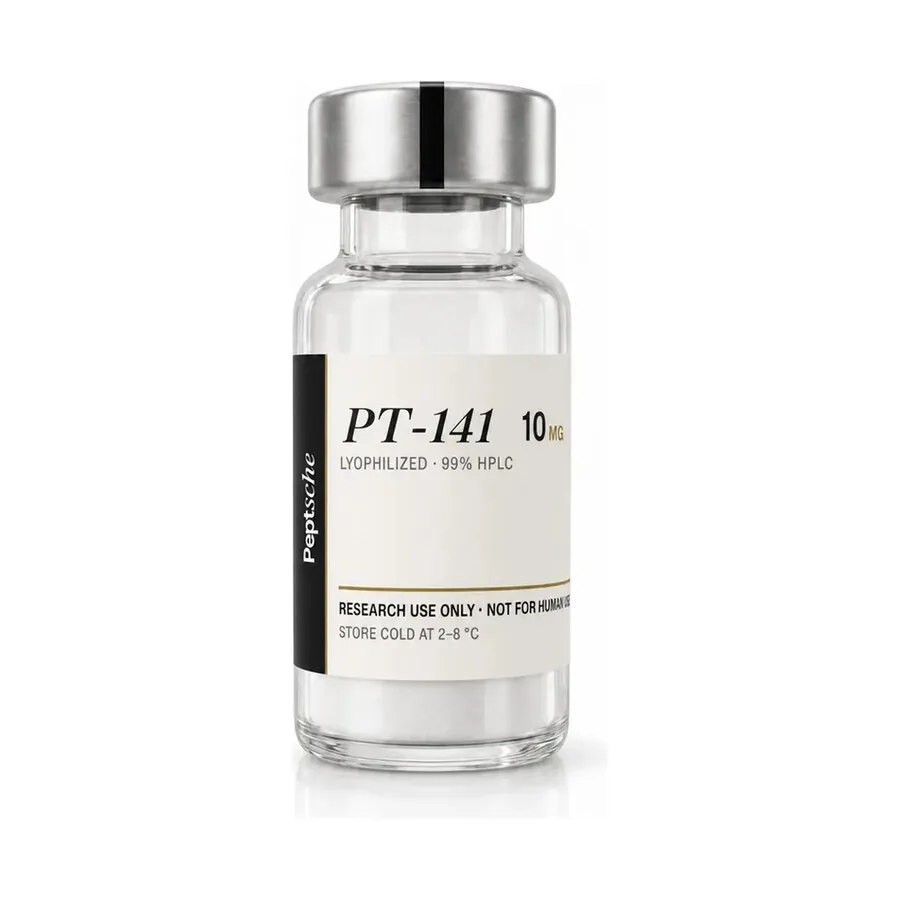
PT-141

What it is for

Sexual-⁠function pathway research. Studied in lab research on the brain signals involved in sexual function.

Bremelanotide

Peptsche PT-141 vial

For research purposes only · Not for human use

NleDHFRWKlactam bridge closes the ring
7amino acids, cyclic
10 mgper vial
99.94%purity, latest lot
Independently tested · Janoshik Analytical
Measured10.59 mg in a 10 mg vial
Purity99.94%View Janoshik purity report #236050 (opens in a new tab) ↗
Endotoxin<1 EU/vialView Janoshik endotoxin report #236051 (opens in a new tab) ↗
ReportJanoshik #236050 & #236051Sept 2026
FormulaC50H68N14O10
Mol. weight1025.2 g/mol
CAS189691-06-3
Vial10 mg lyophilised powder
StorageSealed, 2–8 °C, away from light

A cyclic seven-amino-acid peptide from the melanocortin family, its ring closed by a lactam bridge. The same molecule is the active ingredient of an approved medicine for low sexual desire (Vyleesi); the Peptsche material is a research-grade reagent, not that medicine.

Studied for

  • Receptor-selectivity profiling (MC3R, MC4R)
  • Central melanocortin signalling in neural circuits
  • Analytical & stability method development
  • Phase 3 literature of the approved medicine

How it works in laboratory models

An agonist at melanocortin receptors, with most of the literature on MC3R and MC4R, which raise cyclic AMP. It acts centrally, on signalling in the brain, rather than on blood flow, and the cyclic structure limits backbone flexibility, improving affinity and resistance to enzymes.

Check the lot, not the label.

Each compound page above carries the report number for its latest lot. The certificates sit on peptsche.com and on the laboratory's own site, and both can be read before anything is ordered.

  1. 01Find the Janoshik report number on the compound's page.
  2. 02Open janoshik.com/verification and enter it.
  3. 03Compare the measured content and purity with the vial label. All lot reports are at peptsche.com/lab-reports.

Ready to order?

Every compound in this catalogue is available on peptsche.com, with the lab report for each lot.

Shop now